The Industry's First Intent & Behavior Based Access Control (IBAC) Platform
Because securing autonomous AI requires understanding intent, evaluating behavior, and governing actions - not just verifying identity.

Measurable Impact with Reva.AI


faster application development with AI-powered policy design
reduction in standing privileges with Access Clipping
fewer items to certify through Policy-Based Access Reviews
A New Era of Security for AI-First and Cloud-Native Enterprises
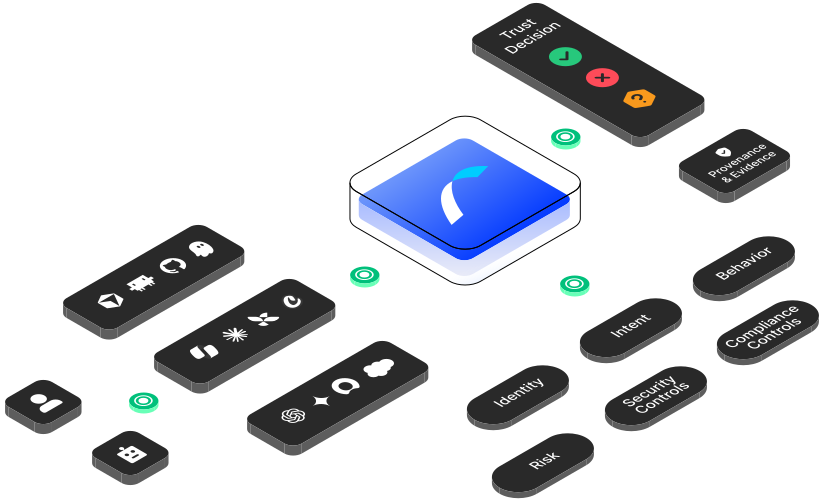
AI-driven and cloud-native environments have outgrown traditional access control. Fragmented policies, static roles, and inconsistent enforcement create blind spots and risk. Reva provides a unified control plane for authorization across AI, applications, and infrastructure — integrating policy design, governance, enforcement and observability.
Strategic Control. Architectural Freedom. Developer Velocity.
.png)
Zero Standing Privileges, Enforced by Design
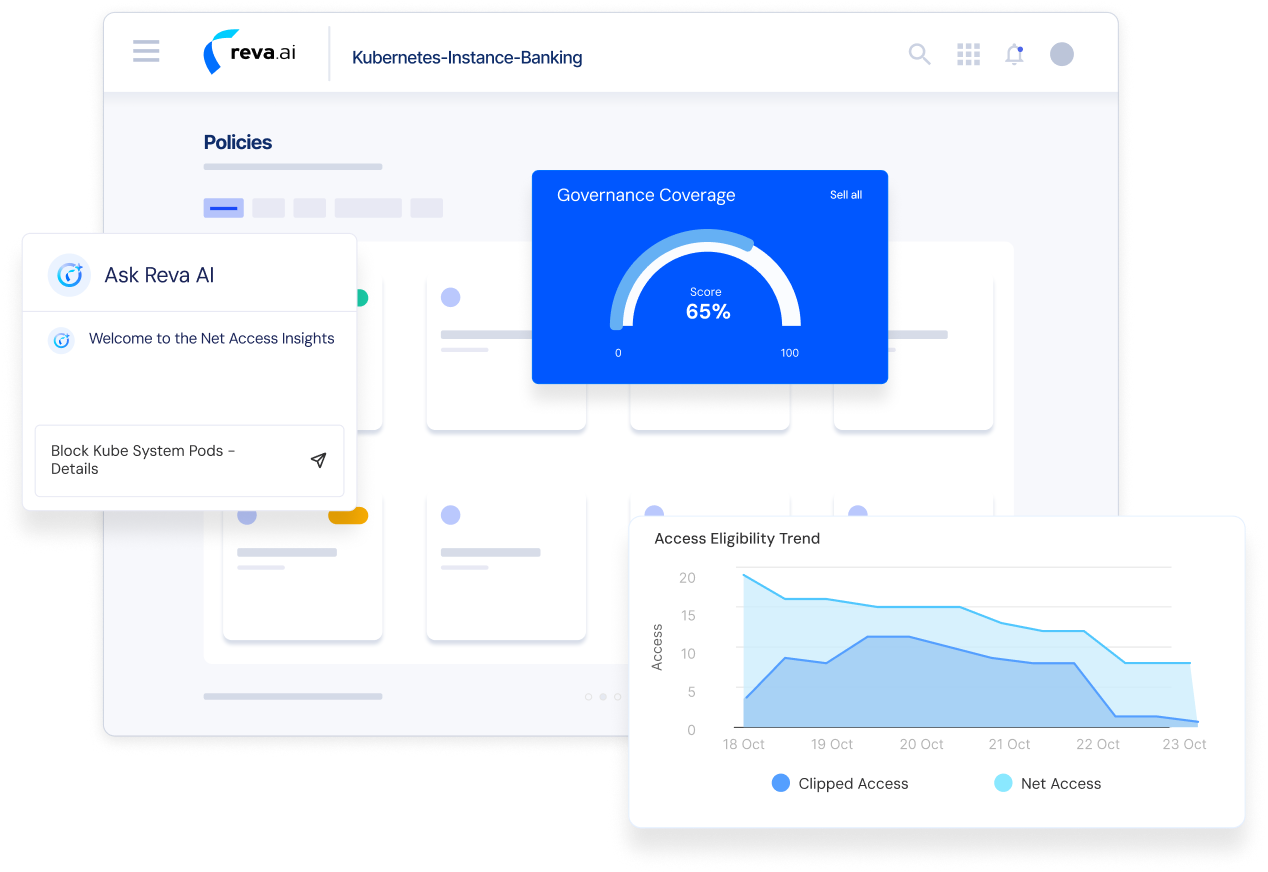
Gain unified visibility and control over all types of policies. Eliminate audit fatigue and the risks of leaky access with a platform built for governance.
- Unified policy orchestration across hybrid cloud and AI workloads
- Audit-ready compliance powered by explainable access paths
- Automated containment of excessive or risky access
.png)
Future-Proof Authorization Architecture
Decouple security from business logic and scale across architectures—without vendor lock-in
- Open standards support (Cedar, OPA)
- Zero technical debt for authorization
- Native support for AI agents, MCP servers and tools

Build Products, Not Authorization Plumbing
Eliminate boilerplate security logic and ship faster with confidence
- NLP-based policy authoring and testing
- Automatic conformance to design and security guardrails
- 100% decision traceability for debugging and audits
Why Reva Is Fundamentally Different?
Translate business intent into governed, explainable authorization policies - without writing code
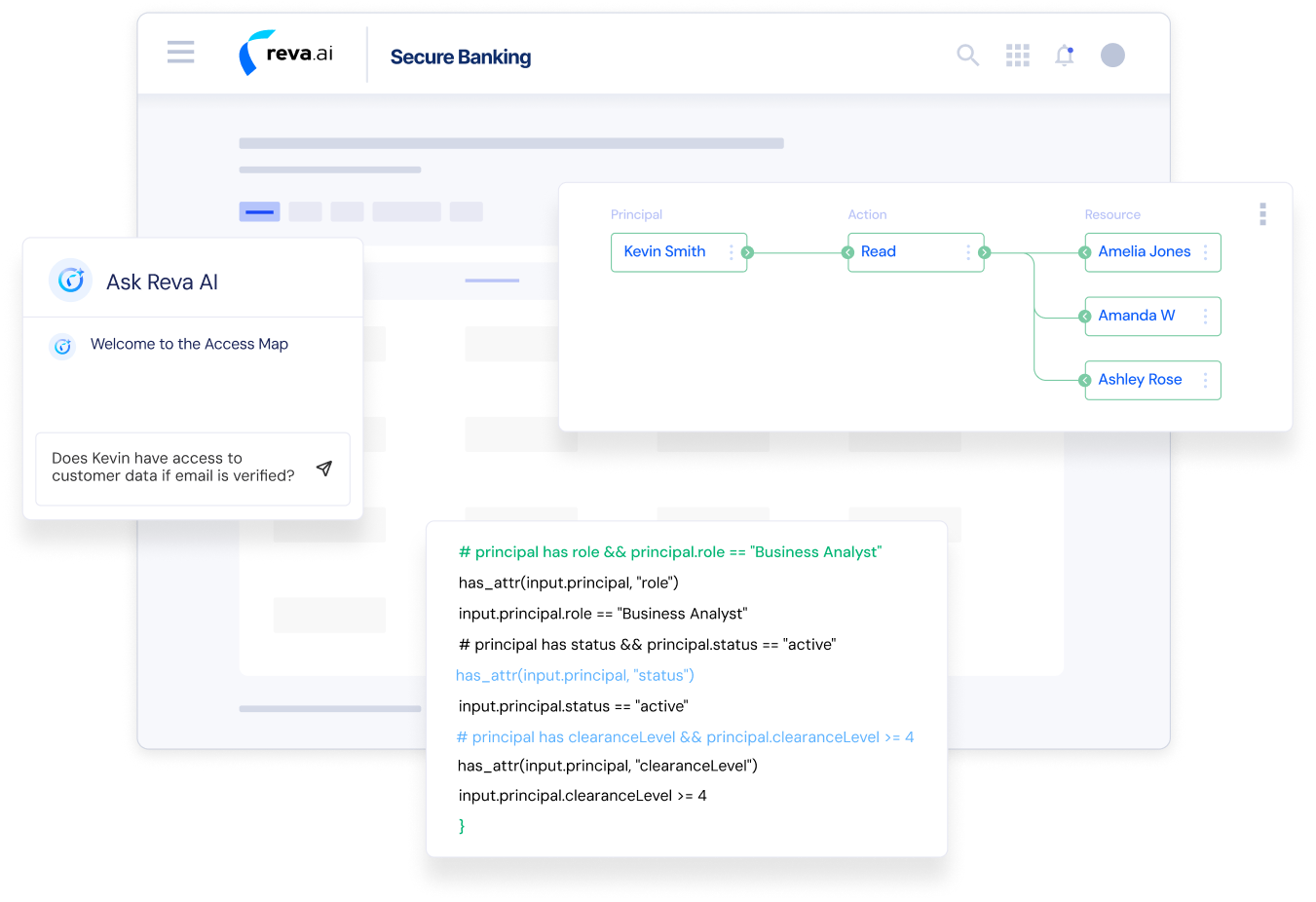
Access Graph + Data Fabric
A real-time Access Graph that exposes actual grant paths, latent entitlements, and risk - far beyond traditional IGA solutions
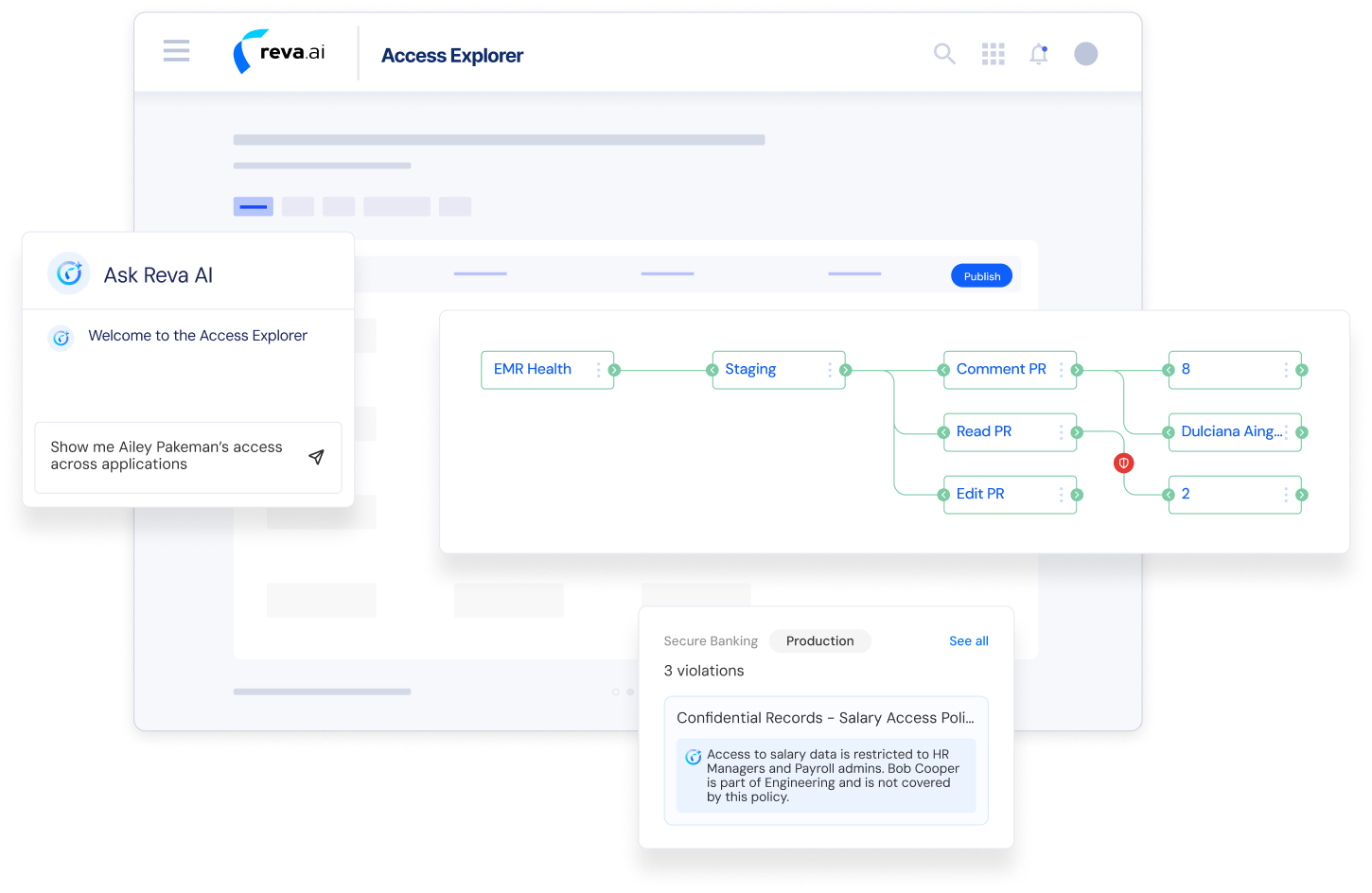
Continuously assess behavior, enforce runtime guardrails, and route risky actions to human-in-the-loop approval or automated containment
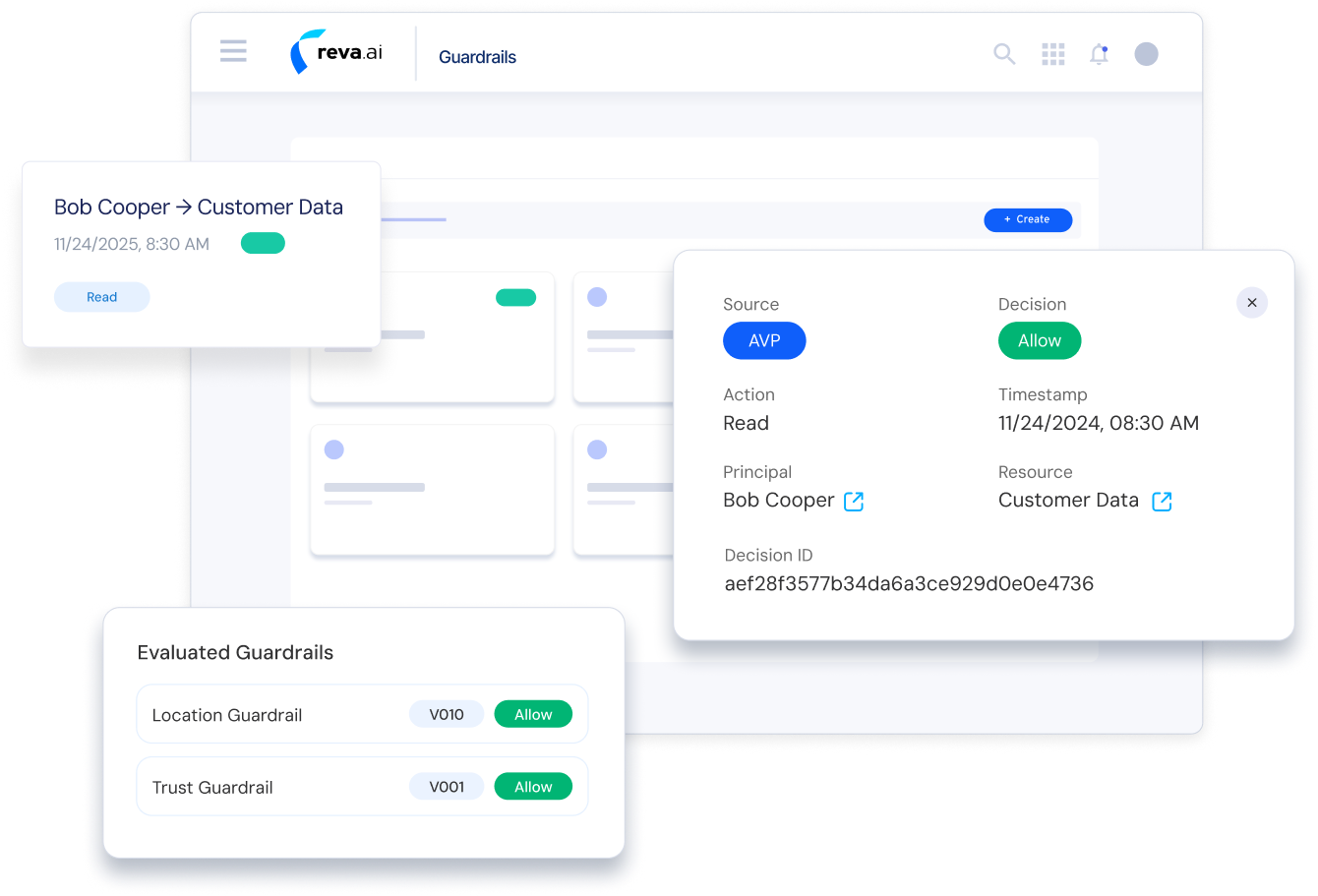
Governance embedded at the core - policy certification, approvals, versioning designed for operational control and continuous audits
Every Workload.
Consistent authorization, governance, and control - tailored to each architecture.
Reva for Agentic AI
Adaptive, runtime authorization for AI agents - controlling what they can access, invoke, and execute, with guardrails and human-in-the-loop enforcement
Reva for Cloud-Native Applications
Static roles can’t secure dynamic systems. Centralize and enforce policy-driven runtime decisions across cloud-native applications.
Reva for SaaS & Data Platforms
Unify and govern fragmented SaaS and data authorization models with automated policy discovery, access graphs, and continuous policy certification
Reva for Cloud-Native Authorization
Unify authorization across APIs, Kubernetes, microservices, and cloud IAM.Enforce runtime, policy-driven access from a single control plane.
Built on Open Standards, Designed for Zero Lock-In
- Adopt open standards like Cedar, OPA and AuthZEN to keep policies portable and avoid proprietary authorization dependencies
- Native support for Shared Signals / CAEP to ingest real-time risk signals as decision context for adaptive authorization
- Enterprise-grade performance with P90 sub-10ms latency, 99.9% availability, and 50–80% faster decisions than XACML-based systems